03Look Beyond Yourself
PADI Rescue Diver Course
PADI Rescue Diver develops awareness of diver problems, self-rescue and responding as part of a team. It is for divers who meet the qualifying certification and navigation requirements, with current accepted CPR and first-aid training. Confirm eligibility with your instructor and prepare for practical exercises rather than treating this as another sightseeing dive course.
- Training Focus
- PreventionRecognising and responding to diver problems.
- Skills Practice
- TeamworkSupervised practice and response scenarios.
- First-Aid Currency
- 24 MonthsCurrent accepted CPR and first-aid training.
Your Learning Experience
What to Expect, Step by Step.
Understand the training, prepare for the requirements and ask the questions that make your course plans clearer.
Check the Full Prerequisite List
PADI lists qualifying Adventure Diver training with the Underwater Navigation Adventure Dive, or an appropriate higher or equivalent certification, among the prerequisites. The minimum age is twelve, with junior certification conditions for younger participants. Your instructor must verify the qualifications required for each stage of training.
Accepted CPR and first-aid training must be current within the previous twenty-four months. PADI’s Emergency First Response guidance distinguishes Primary and Secondary Care from a CPR-and-AED-only course. Send the instructor your actual certification details and dates, and ask whether further training must be completed alongside the Rescue course.
Expect Practice, Observation and Teamwork
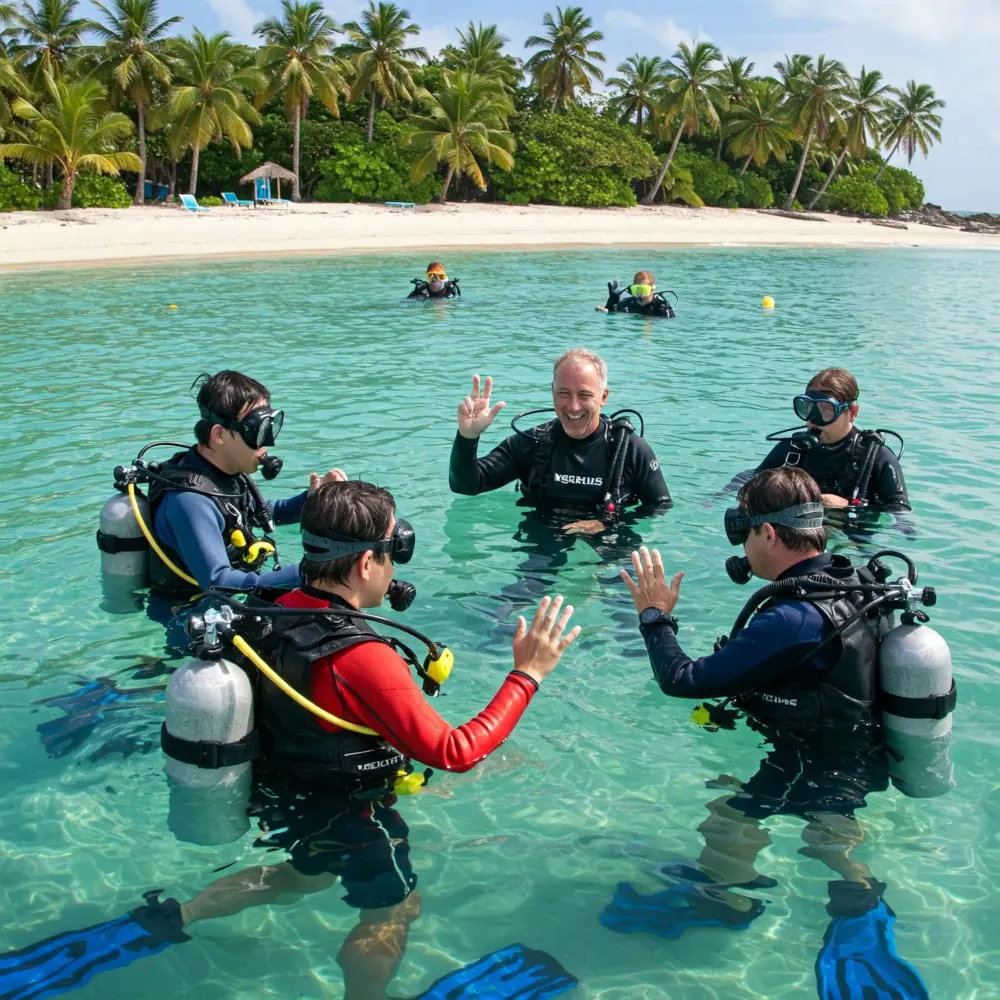
Rescue training shifts attention beyond your own normal dive routine. Expect knowledge development, skills practice and scenarios that build recognition, decision-making and response. Your instructor determines the exercises and assessment; this page is an overview, not a set of rescue techniques to attempt without supervision.
Arrive ready to communicate and ask questions. Explain any concerns about stamina, confidence or unfamiliar equipment before the course begins. Recent practice with your normal scuba setup can help you focus on learning, while unresolved equipment faults or rusty basic skills should be addressed before the scenarios become demanding.
Plan Enough Time for the Whole Course
Ask how the proposed schedule combines study, in-water exercises and any first-aid training you still need. Confirm the equipment and materials provided, the teaching language and the arrangements if a requirement takes more practice. Leave room around travel dates instead of assuming a fixed number of days guarantees completion.
After the course, keep the skills current through appropriate practice and continuing education. Record the dates of your first-aid qualifications and keep your own equipment maintained. Rescue training does not replace professional emergency services, current local emergency arrangements or the need to dive within your training and experience.
Take the Next Step
Make Your Course Plan Personal.
Tell the centre about your experience, preferred dates and teaching language. Ask for the course requirements, equipment arrangements and written inclusions before confirming your trip.
Plan With a Dive CentreWe operate Tioman Dive Buddy and the TDB network. Our directory also includes independent centres, with ownership labelled on each profile. Confirm your course and arrangements with the provider.
Visit Tioman Dive BuddyBefore You Book
Questions Before You Start
Clear answers to the questions that help you plan your next step.
Must I Hold Advanced Open Water Before Rescue?
Advanced Open Water is one common route, but the precise prerequisites can also recognise qualifying Adventure Diver training with underwater navigation or accepted equivalents. Send your certification and navigation details to the instructor before booking. The centre should verify eligibility against the current standards rather than relying on a course-name shortcut.
Does Any Online First-Aid Certificate Qualify?
Do not assume it does. PADI’s published guidance requires current accepted CPR and first-aid training and says online-only courses without hands-on training do not meet its course prerequisite. Give the instructor the provider, course name, completion date and supporting documents, then confirm whether additional practical training is needed.
Can I Begin Rescue Training With Open Water Certification?
Yes, PADI allows Open Water divers to begin Rescue knowledge development and confined-water exercises. You must meet all prerequisites before the open-water exercises and certification, including the qualifying navigation training. Ask the instructor which parts you can start now and how any outstanding requirements will be completed.
Prepare Thoughtfully
Gear to Consider, When You Are Ready.
Ask what the centre provides before buying. These catalogue links help you compare fit and equipment options; they do not represent personal product tests.
We may earn a commission when you follow a product link and purchase through Shopee. This does not change our selection criteria. Price and availability are shown on Shopee. Read Our Affiliate Disclosure


Explore Another Course Stage
Compare the focus and requirements of the other courses before choosing your next step.
01Begin Your Journey
PADI Open Water Diver Course
Read the Course Guide: PADI Open Water Diver Course02Broaden Your Experience
PADI Advanced Open Water Diver Course
Read the Course Guide: PADI Advanced Open Water Diver CourseSources and Further Reading
Course requirements and equipment instructions can change. Follow your instructor and the current manual for your exact equipment model.